To show up in ChatGPT, Gemini, Claude and Perplexity, what those assistants read about your store has to answer the shopper’s question. They read your site, your product data, reviews and what media and other sites publish. Since answers change every time, what you should measure is how often you show up, not where you rank.
This work is called AEO or GEO: optimizing your presence in assistants that answer with text instead of a list of links. More and more shoppers search and compare this way, as we explain in shoppers already have agents.
The short answer
- They name you based on what they read. Your site, your product pages, public reviews and mentions on other sites.
- You can’t buy a spot in the answer. OpenAI says its product results are not ads. Perplexity says its listings are not sponsored.
- Answers change. That’s why you measure how often you show up, not your position.
- Shopping inside the chat is live in the United States. OpenAI says it is live for users there and names no other country. In Latin America, what counts today is showing up in the answer and its links.
How each assistant chooses products
Each company publishes what its assistant reads. These are the differences that matter for a store.
| Search crawler | Product data | Shopping in the chat | |
|---|---|---|---|
| ChatGPT | OAI-SearchBot | Shopify or Etsy catalog, or a feed | In the United States |
| Gemini and AI Mode | Googlebot | Merchant Center | In the United States |
| Perplexity | PerplexityBot | No published feed program | In the United States |
| Claude | Claude-SearchBot and Claude-User | No published feed program | No published feature |
ChatGPT
- It shows products when a question shows shopping intent.
- It picks them with product data from the store and from third parties, such as price and description, and summarizes reviews from public websites.
- It takes into account the memory, custom instructions and approximate location of the person asking.
- When several stores sell the same product, it ranks them on availability, price, quality and whether they are the maker or the main seller.
- Product results are not ads. To be included, your site must allow OAI-SearchBot, though OpenAI does not guarantee placement.
- Shopify and Etsy catalogs are already integrated. Other stores can apply to share a feed, which is not required if ChatGPT already crawls your site.
Gemini, AI Overviews and AI Mode
- Google says there are no additional requirements: the usual SEO practices apply.
- To appear as a link, a page must be indexed and eligible to show with a snippet. You need no special AI files or new structured data.
- A single question can trigger several searches, and AI Mode and AI Overviews may use different models. That is why their answers and links vary.
- Google asks you to keep Merchant Center and your Business Profile up to date, with structured data that matches the visible text.
- Shopping in AI Mode uses the Shopping Graph, which Google says holds over 60 billion listings.
- Google-Extended decides whether your content trains Gemini and grounds answers in the Gemini app. According to Google, it does not affect your inclusion in Search.
Perplexity
- It ranks products on authority and relevance, the same way it ranks its sources.
- It refines results with each person’s past searches and saved preferences.
- It is more likely to recommend stores with complete availability, reviews, pricing and specifications, and it analyzes reviews across several sites.
- Its listings are not sponsored. PerplexityBot is the crawler that surfaces and links sites.
Claude
- Anthropic lists three web search subprocessors for Claude: Brave Search, TurboPuffer and Parallel Web Systems.
- Every search answer includes its sources.
- Claude-SearchBot indexes pages and Claude-User visits them when someone asks. According to Anthropic, blocking either one may reduce your visibility.
- ClaudeBot is the training crawler.
What works in Latin America today
Shopping inside the assistants is available in the United States:
- ChatGPT: OpenAI says shopping is live for users in the United States and names no other country. It also says it is moving away from a standalone Instant Checkout: the purchase happens on the store’s own site or app.
- Gemini and AI Mode: shopping in the Gemini app and agentic checkout in AI Mode launched in the United States. Universal Cart, Google’s cart for several stores at once, launched on October 15, 2026, also only in the United States.
- Perplexity: Instant Buy is available to all users in the United States.
What does work in the region is free listings in Google Merchant Center. They show on Google Shopping, Search, Images, YouTube and Lens, and they are available in Mexico, Colombia, Brazil, Argentina and Chile, among other countries. Google does not say whether that data feeds its AI answers in the region.
Answers reach the region too. ChatGPT web search is on every plan, even without signing in, and OpenAI’s help page does not limit it to a country. AI Mode reached Spanish in September 2025, according to TechCrunch. Even when shoppers can’t pay inside the chat, the assistant can name your store and link your site.
If you also sell in the United States or Canada, Google is rolling out a free Merchant Center report there on how your products show up in AI Mode, AI Overviews and the Gemini app. To measure your presence in Google, that report may be enough.
Agents that buy for the person, such as Meta’s Muse, and the bank pilots in the region are covered in which AI agents already buy.
How to check manually if your store shows up in ChatGPT
One question doesn’t tell you much. SparkToro and Gumshoe, a company that sells AI tracking, asked about 600 volunteers to run the same questions in ChatGPT, Claude and Google. In ChatGPT and Google, the chance of getting the same list of brands twice was less than 1 in 100, and Claude was only slightly more consistent. What held steadier was how often each brand appears.
That’s why you check with several questions, several times. Use five kinds of questions. These are examples for a home goods store:
- Discover: “Which cotton sheets do you recommend for a hot climate?”
- Compare: “Where should I buy bedding, at [your store] or at [a competitor]?”
- Where to buy: “Where can I buy a cotton sheet set in Bogotá?”
- Price: “How much does a good cotton sheet set cost in Mexico?”
- Trust: “Is [your store] a trustworthy place to buy online?”
Ask each question at least three times in each assistant and write down who shows up. Start in a private window or signed out, where the assistant allows it. Then repeat signed in to see what a returning shopper sees. ChatGPT uses memory and approximate location, and Perplexity uses past searches, so the result changes with who is asking and from where.
Ask in your shoppers’ language. A University of Toronto study found that answers change more across languages than across different ways of asking the same question.
In a spreadsheet, record the date, the assistant, the city, whether you were signed in, whether you show up, which product it names, which sources it cites and which competitors it mentions. Then count. With 5 questions, 3 times, in 4 assistants, you have 60 answers. If you show up in 15, you are named in 25% of them. That number, repeated every month, tells you whether you are improving.
What to change to show up more
- Let the search crawlers in. In your robots.txt file, allow OAI-SearchBot for ChatGPT, Googlebot for Google, PerplexityBot for Perplexity, and Claude-SearchBot and Claude-User for Claude. Training crawlers, such as GPTBot, ClaudeBot or Google-Extended, are a separate decision. OpenAI also asks that your host or CDN allow its crawler’s IP addresses. Changes take about a day to apply at OpenAI and Perplexity. OpenAI names Microsoft among its search providers, so make sure your site is indexed in Bing.
- Complete your product data. Price, availability, description and specifications, the same on your site and in your feeds. Add product structured data that matches the page’s visible text, as Google asks.
- Keep Merchant Center up to date. Google asks you to keep it current for its AI features, and its free listings work in the region. Google does not say whether that data feeds its AI answers there.
- Use your platform’s channels. If you sell on Shopify or Etsy, your catalog is already integrated with ChatGPT, and other stores can apply to share a feed. Shopify also says its Agentic Storefronts take a store’s products to ChatGPT, Google AI Mode and Gemini, Microsoft Copilot and Meta, and are active by default for eligible stores.
- Earn reviews and mentions on other sites. ChatGPT summarizes reviews from public websites, and Perplexity analyzes reviews across several sites. In the University of Toronto study, 92.1% of assistant citations about consumer electronics in the United States came from third-party sites. Ahrefs analyzed 75,000 brands: mentions on YouTube and on other sites relate more to showing up in ChatGPT and in Google’s AI features than domain authority does. Ahrefs notes that this is correlation, not cause, and that its sample is larger brands.
- Write pages that answer. Buying guides with data, comparisons and sources. In a study by Princeton and other universities, adding citations, quotations and statistics to a text raised its visibility in generated answers by 30% to 40% in their test engine. Keyword stuffing did not help. The study used general queries, not shopping ones.
If you sell on marketplaces, check which crawlers they let in. Mercado Libre’s robots.txt in Mexico, Brazil and Colombia blocks GPTBot, ChatGPT-User, ClaudeBot, Claude-User, PerplexityBot and Perplexity-User. It does not name OAI-SearchBot or Claude-SearchBot. Amazon’s, in the United States and Mexico, blocks all of those crawlers, including OAI-SearchBot, Claude-SearchBot and Google-Extended. Your own site is the page you control, so make sure the search crawlers can read it.
How Tino measures it
A manual check shows where you stand today. Doing it well takes time: many questions, in four assistants, repeated every month. There are tools that do this work at scale: they ask every day automatically, count the mentions and tell you when something changes, without you having to ask.
Tino is an AI operator for online stores, built by Merkanthub, that includes this check. It asks each question once a day in ChatGPT, Gemini, Claude and Perplexity, counts how often you are mentioned over the last 28 days and shows a 95% range for each figure. It also matches those answers against your store’s data: which categories and products sell most, at what price, and whether the assistants name them or quote another price. Here is how it looks:
Figures for the last 28 days: answers name you 24% of the time (95% range 19% to 29%, up 3.1 points); your share of voice is 18% (14% to 22%, up 2.2 points); 9% of answers link your site (6% to 12%, no clear change); and 7% name you before anyone else (5% to 10%, down 1.2 points).
- Named in answers
- 24%
- Up 3.1 pts
- 95% range 19–29%
- Share of voice
- 18%
- Up 2.2 pts
- 95% range 14–22%
- Your site linked
- 9%
- No clear change
- 95% range 6–12%
- Named first
- 7%
- Down 1.2 pts
- 95% range 5–10%
Named in answers, by category and engine
Your store shows up most in bedding and bath, and least in decor, especially in Gemini (6%).
| Category | ChatGPT | Gemini | Claude | Perplexity |
|---|---|---|---|---|
| Bedding | 36% | 30% | 28% | 34% |
| Kitchen | 22% | 18% | 26% | 20% |
| Lighting | 30% | 24% | 16% | 28% |
| Decor | 18% | 6% | 20% | 14% |
| Bath | 26% | 22% | 30% | 32% |
Revenue against visibility
Decor brings 22% of your sales and engines name you in 15% of its answers; bedding brings 34% and engines name you in 32%.
Categories that sell more than engines name you, like Decor, are the first to look at.
Best sellers in answers
Of your four best sellers, answers about the sheet set name you 3 times out of 4, and answers about the vase never do. For the sheets, engines quote $99 instead of $89.
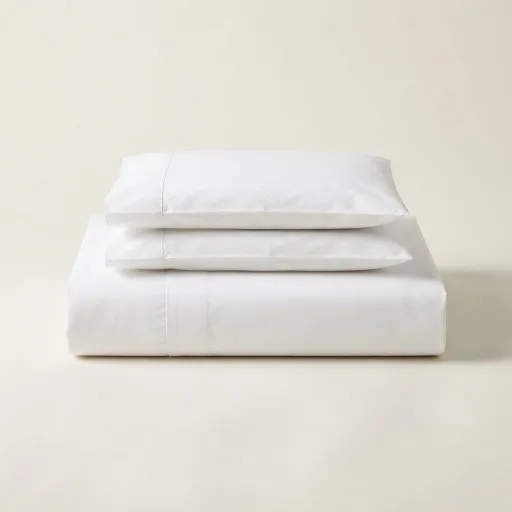 Bedding
Marea
Percale cotton sheet set
$89your price
Engines quoted $99 in 2 answers. Your catalog says $89.
- Named you
- 3 of 4
- Linked to
- Your store, linked in 2 of 4 answersNordvel, linked in 1 of 4 answers
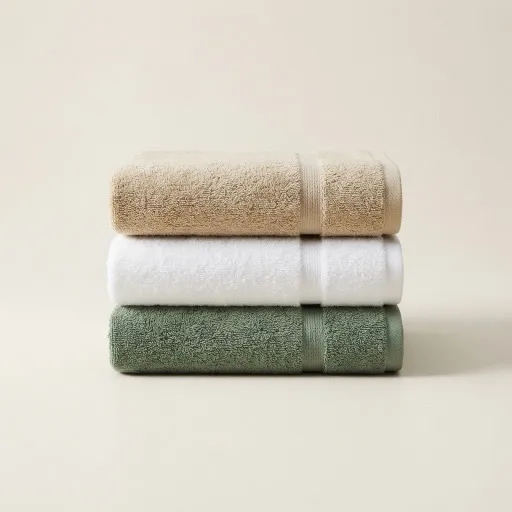 Bath
Sereno
Cotton towel set
$39your price
Engines quoted $35 in 1 answers. Your catalog says $39.
- Named you
- 2 of 4
- Linked to
- Only your store
 Lighting
Lumbre
Table lamp with linen shade
$64your price
- Named you
- 1 of 4
- Linked to
- Nordvel, linked in 2 of 4 answersAurenta, linked in 1 of 4 answers
 Decor
Barro Vivo
Handmade ceramic vase
$28your price
- Named you
- 0 of 4
- Linked to
- Aurenta, linked in 2 of 4 answersKestrel, linked in 1 of 4 answers
Stores compared
Answers name Nordvel most often (31%), followed by your store (24%) and Aurenta (22%).
| # | Store | Named | Share | Linked | Named first |
|---|---|---|---|---|---|
| 1 | Nordvel | 31% | 23% | 12% | 11% |
| 2 | Your storeYou | 24% | 18% | 9% | 7% |
| 3 | Aurenta | 22% | 17% | 8% | 6% |
| 4 | Kestrel | 17% | 13% | 5% | 4% |
| 5 | Miravox | 12% | 9% | 4% | 2% |
It shows you where you are left out and what your pages are missing to get in, with the data behind it. To see how it works with your store, book a demo.
Sources
Checked on October 19, 2026.
- OpenAI, Shopping with ChatGPT search, help center, updated October 2026.
- OpenAI, merchants page, undated.
- OpenAI, Powering product discovery in ChatGPT, March 24, 2026.
- OpenAI, Searching the web with ChatGPT, help center, updated August 2026.
- OpenAI, crawler documentation, undated.
- Google Search Central, AI features and your website, updated December 10, 2025.
- Google, common crawlers documentation, updated October 15, 2026.
- Google, Gemini shopping and agentic checkout announcement, November 13, 2025.
- Google, Universal Cart launch, October 15, 2026.
- Google Merchant Center, free listings countries, help center, undated.
- Google Merchant Center, AI performance insights, help center, May 27, 2026.
- TechCrunch, Google’s AI Mode arrives in Spanish globally, September 23, 2025.
- Shopify, Agentic Storefronts, help center, undated.
- Perplexity, crawler documentation, undated.
- Perplexity, What is Instant Buy?, help center, updated August 29, 2026.
- Anthropic, crawler documentation, help center, April 7, 2026.
- Anthropic, subprocessors, Trust Center, undated.
- Anthropic, Enabling and using web search, help center, undated.
- Rand Fishkin (SparkToro) and Patrick O’Donnell (Gumshoe), AIs are highly inconsistent when recommending brands or products, January 28, 2026.
- Louise Linehan (Ahrefs), AI brand visibility correlations study, December 12, 2025.
- Chen, Wang, Chen and Koudas (University of Toronto), study of the sources AI search engines cite, preprint, September 10, 2025.
- Aggarwal and others (Princeton and other universities), GEO: Generative Engine Optimization, KDD 2024.
- robots.txt files for Mercado Libre Mexico, Brazil and Colombia, and for Amazon United States and Mexico.
Frequently asked questions
Can I pay to show up in ChatGPT?
Not in the product results. OpenAI says those results are not ads and are not influenced by its partnerships. ChatGPT shows ads, but separately from those results. Perplexity also says its product listings are not sponsored.
Does ChatGPT sell products in Latin America?
OpenAI says shopping in ChatGPT is live for users in the United States and names no other country. In the region, ChatGPT can name your store and link your site in its web search answers.
Why does ChatGPT show me and someone else different stores?
Because each answer depends on who is asking. ChatGPT takes each person’s memory and custom instructions into account, and it can use their approximate location. Answers also change from one run to the next: SparkToro found less than a 1 in 100 chance of getting the same list of brands twice.
Does blocking AI bots take me out of the answers?
It depends on the bot. OpenAI says sites that block OAI-SearchBot are not shown in ChatGPT search answers. Anthropic says blocking Claude-SearchBot may reduce your visibility in Claude, and PerplexityBot is the crawler Perplexity uses to surface and link sites. Blocking training crawlers, such as GPTBot or ClaudeBot, is a separate decision. Google-Extended does not affect your inclusion in Google Search.
Do I need an llms.txt file?
Google says you need no new AI files or special structured data to appear in AI Overviews or AI Mode. What does count is that crawlers can get in and that your pages are indexed. OpenAI, Perplexity and Anthropic don’t ask for it in the guides we cite either.
Does Google Merchant Center help me show up in AI?
Google asks you to keep Merchant Center up to date for its AI features. Its free listings work in Mexico, Colombia, Brazil, Argentina and Chile, and they show on Google Shopping, Search, Images, YouTube and Lens. Google does not say whether that data feeds its AI answers in the region.
How often should I check?
Repeat the same set of questions once a month to see the trend. After you change your robots.txt, wait at least a day: OpenAI and Perplexity take about 24 hours to apply the change. Tino asks each question once a day and sums up the last 28 days.
